

Replacing Missing Teeth with Dental Bridges in Herriman
Losing a tooth can affect much more than the appearance of your smile. A missing tooth may make it harder to chew certain foods, change the way you speak, and allow neighboring teeth to gradually shift out of position.
Fortunately, you don’t necessarily have to live with an empty space in your smile.
Dental bridges are a time-tested restorative option designed to replace one or more missing teeth. At Young Family Dental Herriman, we can evaluate your smile and help determine whether a dental bridge or another tooth replacement option is right for you.
What Is a Dental Bridge?
A dental bridge is a fixed dental restoration used to fill the space left by one or more missing teeth.
As the name suggests, the restoration essentially “bridges” the gap in your smile.
A traditional dental bridge typically consists of an artificial replacement tooth, called a pontic, supported by dental crowns placed on the natural teeth on either side of the gap.
Once secured in place, the bridge is not removed each day like a traditional removable partial denture.
The result is a restoration designed to improve the appearance and function of your smile.
Why Should You Replace a Missing Tooth?
If a missing tooth isn’t particularly visible, you might wonder whether replacing it is really necessary.
The answer depends on your individual situation, but missing teeth can affect several aspects of your oral health.
Replacing a missing tooth may help:
- Restore your ability to chew
- Improve the appearance of your smile
- Support clearer speech
- Maintain the spacing between teeth
- Reduce unwanted shifting of neighboring teeth
- Distribute biting forces more appropriately
Your dentist can explain the potential consequences of leaving a particular space untreated and whether replacement is recommended.
How Can Missing Teeth Affect Your Bite?
Your teeth work together as a system.
When one tooth is lost, the neighboring teeth may gradually begin shifting toward the open space. A tooth in the opposite arch may also move farther into the gap because it no longer has an opposing tooth.
These changes can affect the way your teeth come together.
Shifting doesn’t necessarily happen immediately, but replacing a missing tooth can help maintain more stable tooth positioning and function.
How Does a Traditional Dental Bridge Work?
A traditional bridge uses the teeth on either side of a missing tooth as anchors.
These supporting teeth are called abutment teeth.
The abutment teeth are prepared for dental crowns. The replacement tooth sits between the crowns, creating one connected restoration.
Once the bridge is secured, the artificial tooth fills the empty space while the neighboring teeth provide support.
Traditional bridges can be an effective solution when the teeth next to the space are healthy enough to support the restoration.
What Does a Dental Bridge Look Like?
Modern dental bridges are designed with appearance in mind.
Depending on the materials used, the replacement tooth and crowns can be created to coordinate with the color, shape, and proportions of your natural teeth.
Your dentist considers factors such as:
- Tooth color
- Tooth shape
- Bite
- Gumline
- Location of the missing tooth
- Surrounding teeth
The goal is to create a restoration that functions well while blending naturally with your smile.
What Types of Dental Bridges Are Available?
There are several types of dental bridges, and the appropriate option depends on the location of the missing tooth and the condition of the surrounding teeth.
Traditional Dental Bridge
A traditional bridge is supported by crowns placed on natural teeth on both sides of the gap.
This is one of the most commonly used bridge designs.
Cantilever Bridge
A cantilever bridge is supported by a tooth on only one side of the missing space.
Because of the forces placed on the supporting tooth, this type of bridge is only appropriate in certain situations.
Maryland Bridge
A Maryland bridge typically uses a framework or “wings” bonded to the backs of neighboring teeth rather than full dental crowns.
These restorations may be appropriate for certain missing teeth, particularly in areas where biting forces are lower.
Implant-Supported Bridge
When several teeth are missing, dental implants may sometimes be used to support a bridge.
Instead of relying entirely on natural teeth, implants provide support for the restoration.
Your dentist can explain which options may work for your particular smile.
Who Is a Candidate for a Dental Bridge?
Dental bridges can be appropriate for many patients with missing teeth, but treatment isn’t one-size-fits-all.
Before recommending a bridge, your dentist will evaluate:
- The number of missing teeth
- Location of the gap
- Health of neighboring teeth
- Gum health
- Bone support
- Your bite
- Existing dental restorations
- Your oral hygiene
- Your overall treatment goals
Healthy supporting teeth are especially important for a traditional bridge because they must carry the forces placed on the restoration.
What Happens When You Get a Dental Bridge?
The process begins with a comprehensive dental evaluation.
Your dentist examines the missing-tooth area and the surrounding teeth. Dental X-rays may also be taken to evaluate the roots, bone, and other structures.
If a traditional bridge is recommended, the supporting teeth are prepared for crowns.
Impressions or digital scans are then taken so the bridge can be designed to fit your mouth.
Depending on the treatment process, you may wear a temporary bridge while your final restoration is being created.
Once the permanent bridge is ready, your dentist checks the fit, appearance, and bite before securing it in place.
Does Getting a Dental Bridge Hurt?
The supporting teeth are typically numbed with local anesthetic during preparation.
You may feel pressure or vibration during the procedure, but the goal is to keep you comfortable throughout treatment.
Some temporary sensitivity may occur afterward.
Once you’ve adjusted to your bridge, it should feel comfortable during normal biting and chewing. Contact your dentist if your bite feels uneven or you experience persistent discomfort.
Dental Bridge vs. Dental Implant
Dental bridges and dental implants can both replace missing teeth, but they work differently.
A traditional bridge relies on neighboring natural teeth for support.
A dental implant is placed in the jawbone and acts as an artificial tooth root. A crown is then attached to the implant to replace the visible portion of the tooth.
One advantage of an implant is that neighboring teeth generally don’t need to be prepared for crowns solely to support the replacement tooth.
However, implants require adequate bone, a surgical procedure, healing time, and other considerations.
A bridge may be preferable for certain patients depending on their oral health, timeline, existing restorations, or personal preferences.
Neither option is automatically best for everyone.
Dental Bridge vs. Partial Denture
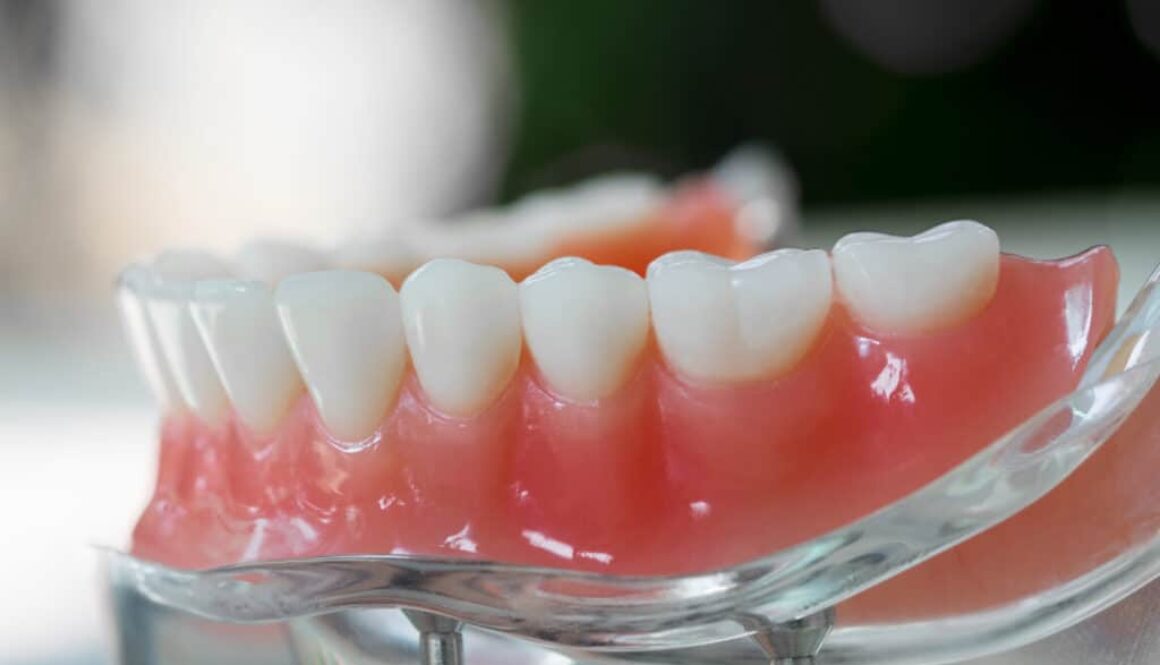
A removable partial denture can also replace one or more missing teeth.
The primary difference is that a traditional dental bridge is fixed in place, while a partial denture is designed to be removed.
Partial dentures may be particularly useful when multiple teeth are missing in different areas of the mouth.
Your dentist can compare your options based on how many teeth you’re missing, your oral health, budget considerations, and long-term goals.
How Long Do Dental Bridges Last?
Dental bridges are designed for long-term use, but no restoration lasts forever.
The lifespan of a bridge depends on factors such as:
- Oral hygiene
- Condition of the supporting teeth
- Gum health
- Teeth grinding
- Diet
- Biting habits
- Regular dental care
A well-maintained bridge can provide many years of function.
Regular dental examinations allow your dentist to monitor both the restoration and the supporting teeth.
Can You Get a Cavity Under a Bridge?
Yes.
The artificial replacement tooth cannot develop a cavity, but the natural teeth supporting a traditional bridge still can.
Decay may develop around the edges of the crowns if plaque accumulates.
This makes excellent oral hygiene especially important.
Protecting the supporting teeth helps protect the entire bridge.
How Do You Floss Under a Dental Bridge?
Because the replacement tooth is connected to the crowns, you usually can’t slide regular floss directly down between the individual units of a traditional bridge.
Instead, you need to clean underneath the replacement tooth.
Your dental team may recommend tools such as:
- Floss threaders
- Specialized bridge floss
- Interdental brushes
- Water flossers
These tools can help remove plaque and food debris from beneath the bridge and around the supporting teeth.
Your hygienist can demonstrate the best technique for your particular restoration.
How Do You Care for a Dental Bridge?
Daily maintenance is essential for keeping your bridge and supporting teeth healthy.
Remember to:
- Brush twice daily with fluoride toothpaste.
- Clean underneath your bridge every day.
- Floss around the supporting teeth.
- Attend regular dental cleanings.
- Keep up with routine dental examinations.
- Avoid chewing ice or extremely hard objects.
- Wear a nightguard if recommended for grinding or clenching.
A bridge is an investment in your smile, and consistent care can help protect that investment.
What Happens If You Don’t Clean Under a Bridge?
Food debris and plaque can accumulate beneath the replacement tooth and around the supporting teeth.
Over time, this may contribute to:
- Gum inflammation
- Bad breath
- Cavities in supporting teeth
- Gum disease
- Problems with the bridge
Even though the artificial tooth can’t decay, the tissues and natural teeth surrounding it still require daily care.
Can a Bridge Replace Multiple Missing Teeth?
Yes, dental bridges can sometimes replace more than one missing tooth.
However, the longer the span of missing teeth, the more carefully your dentist must consider how the restoration will be supported.
In some cases, an implant-supported bridge or another tooth replacement option may provide more appropriate support.
The number and location of missing teeth will help determine which treatment options are available.
What If the Teeth Next to the Gap Already Have Crowns?
If the teeth neighboring the missing space already have large restorations or crowns, a traditional bridge may sometimes be worth considering.
Because those teeth have already required significant restorative treatment, using them as bridge supports may fit well within an overall treatment plan.
However, their health and strength still need to be evaluated before proceeding.
Is a Dental Bridge Right for You?
Choosing how to replace a missing tooth is a personal decision that should be based on your dental health and treatment goals.
A dental bridge may be worth considering if you:
- Have one or more missing teeth
- Want a fixed restoration
- Have healthy teeth capable of supporting the bridge
- Prefer an alternative to a removable partial denture
- Are not pursuing an implant
- Want to restore chewing and appearance
Your dentist can help you compare a bridge with implants, partial dentures, and other available options.
Restore Your Smile at Young Family Dental Herriman
Missing a tooth can affect the way your smile looks, feels, and functions. Fortunately, there are several ways to restore what you’ve lost.
Dental bridges provide a fixed solution for replacing missing teeth and may help restore chewing ability, improve the appearance of your smile, and maintain more stable tooth positioning.
At Young Family Dental Herriman, we’ll evaluate your teeth, gums, bite, and overall oral health to help determine which tooth replacement option fits your needs.
If you’re missing one or more teeth, contact Young Family Dental Herriman to schedule an appointment and learn whether a dental bridge could help complete your smile.