

Understanding Tooth-Saving Options in American Fork
When a tooth becomes damaged, decayed, or infected, you may worry that losing the tooth is inevitable. Fortunately, modern dentistry offers several ways to repair damaged teeth and preserve your natural smile.
At Young Family Dental in American Fork, Utah, saving a natural tooth whenever possible is an important part of restorative dental care. Depending on the extent of the damage, treatments such as dental fillings, crowns, or root canal therapy may help restore the health and function of your tooth.
The right treatment depends on what is happening beneath the surface. Understanding your tooth-saving options can help you feel more confident when discussing your dental care.
Why Is Saving a Natural Tooth Important?
Your natural teeth are designed to work together. Each tooth plays a role in biting, chewing, speaking, and maintaining the alignment of your smile.
When a tooth is lost, neighboring teeth may gradually shift toward the open space. Missing teeth can also change how chewing forces are distributed throughout your mouth.
Although modern tooth replacement options can restore missing teeth, preserving your natural tooth is often preferable when the tooth can be successfully treated.
The key is addressing dental problems before the damage becomes too extensive.
Dental Fillings for Cavities and Minor Damage
One of the simplest ways to save a tooth affected by decay is with a dental filling.
Cavities develop when tooth decay damages the enamel and creates an opening in the tooth. Without treatment, decay can continue spreading deeper into the tooth.
During a filling procedure, the decayed portion of the tooth is removed and the area is restored with dental material. The filling helps restore the tooth’s structure while protecting the affected area from additional damage.
Fillings are typically appropriate when decay is relatively limited. If a cavity becomes too large, another restoration may be needed.
This is one reason regular dental exams are so important. Detecting cavities early can often mean simpler treatment.
Dental Crowns for Weakened or Damaged Teeth
When a tooth has more extensive damage than a filling can repair, a dental crown may be recommended.
A crown is a custom restoration that covers the visible portion of a tooth. It can strengthen and protect the remaining natural tooth structure while restoring its appearance and function.
Dental crowns may be used for teeth that are:
- Cracked or fractured
- Significantly worn down
- Weakened by a large cavity
- Damaged by an injury
- Unable to support a large filling
- Treated with root canal therapy
Crowns can also help restore the natural shape and appearance of a damaged tooth.
Instead of removing a tooth simply because a significant portion has been damaged, a crown may allow the healthy remaining structure to be preserved.
Root Canal Therapy Can Save an Infected Tooth
Sometimes the problem isn’t limited to the outside of the tooth.
Inside each tooth is soft tissue called the pulp, which contains nerves and blood vessels. Deep decay, cracks, injuries, or other damage can allow bacteria to reach this area.
When the pulp becomes infected or severely inflamed, you may experience symptoms such as persistent tooth pain, sensitivity, swelling, or discomfort when chewing.
This is where root canal therapy can help.
During a root canal, the damaged or infected pulp is removed. The inside of the tooth is then cleaned, filled, and sealed. A crown is commonly used afterward to protect and strengthen the treated tooth.
Rather than extracting the entire tooth, root canal treatment allows the outer structure and root of the natural tooth to remain in place.
How Do You Know Which Treatment You Need?
It isn’t always possible to determine how damaged a tooth is simply by looking at it.
A small crack could extend deeper than expected. A tooth that looks relatively normal from the outside could have significant decay underneath an old filling. Tooth pain could also indicate that bacteria have reached the pulp.
Your dentist will examine the tooth and may take dental X-rays to determine how much of the tooth is affected.
From there, treatment can be based on factors such as:
- How much healthy tooth structure remains
- Whether decay has reached the pulp
- Whether the tooth is cracked or fractured
- The condition of the tooth’s root
- Your symptoms
- The location of the tooth
The goal is to choose an appropriate treatment that restores your oral health while preserving natural tooth structure whenever possible.
When Is a Tooth Extraction Necessary?
While dentists often try to preserve natural teeth, there are situations where a tooth may be too damaged to save.
Severe fractures, extensive decay, advanced infection, or other complications may make extraction necessary. In these situations, removing the tooth can protect surrounding tissues and address pain or infection.
If an extraction is necessary, your dentist can also discuss options for replacing the missing tooth.
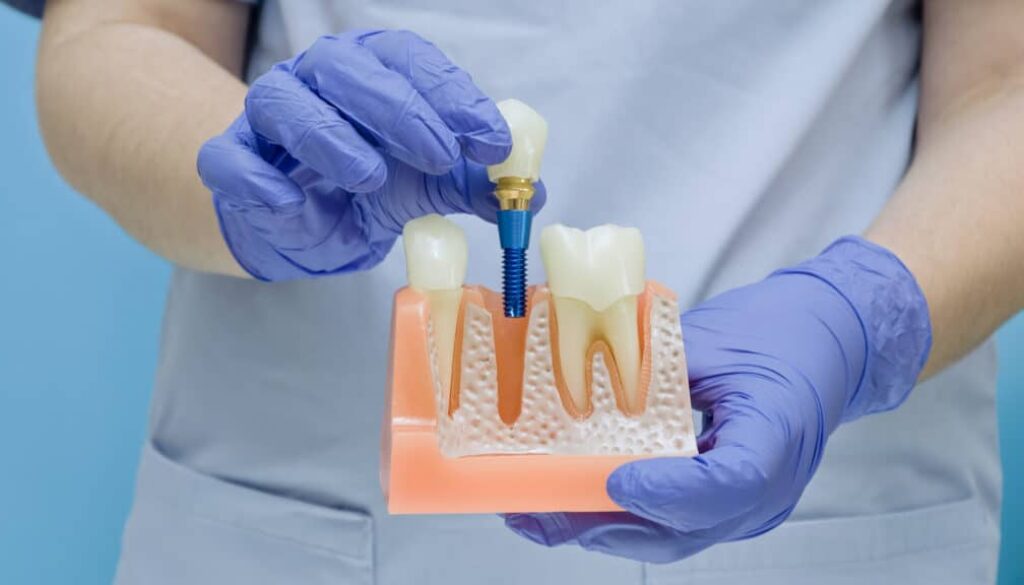
Dental implants, bridges, partial dentures, and other restorations may be considered depending on your individual needs.
However, seeking treatment early may give your dentist more opportunities to repair a damaged tooth before extraction becomes necessary.
Don’t Wait for Tooth Pain to Become Severe
One of the most important things you can do to save a damaged tooth is to seek treatment early.
Dental problems generally don’t resolve on their own. A small cavity can become larger. A crack can worsen. Bacteria can travel deeper into a tooth and eventually reach the pulp.
Waiting until a tooth becomes extremely painful may mean that the condition has already progressed.
Contact your dentist if you notice:
- Persistent tooth pain
- Sensitivity to hot or cold
- Pain when biting or chewing
- A cracked or chipped tooth
- A lost or damaged filling
- Swelling around a tooth
- Changes in tooth color
- A bump on the gums near a tooth
Even if the discomfort seems minor, having the tooth evaluated can help identify the cause.
Preventive Dentistry Helps Protect Natural Teeth
Of course, one of the best tooth-saving strategies is preventing significant damage in the first place.
Brush twice a day with fluoride toothpaste and floss daily to help control plaque and reduce your risk of cavities and gum disease.
Regular dental cleanings and exams are equally important. Your dentist can identify early signs of decay, weakened restorations, cracks, gum problems, and other concerns that you might not notice at home.
Treating a small problem today can potentially prevent the need for more extensive restorative treatment later.
Save Your Smile at Young Family Dental in American Fork
A damaged tooth doesn’t automatically mean that the tooth needs to be removed. Depending on the condition of your smile, treatments such as fillings, dental crowns, and root canal therapy may help preserve your natural tooth.
At Young Family Dental in American Fork, our dental team can examine your tooth, determine the extent of the damage, and explain your treatment options.
If you’re experiencing tooth pain, sensitivity, a broken tooth, or another dental concern, don’t wait for the problem to get worse. Schedule an appointment with Young Family Dental in American Fork, Utah to learn which tooth-saving treatment may be right for you.