

The Importance of Replacing Missing Teeth with Young Family Dental Orem
Losing a tooth can change the appearance of your smile, but the effects don’t necessarily stop there. Missing teeth can also influence how you chew, how your remaining teeth fit together, and your long-term oral health.
Whether you’ve lost a tooth because of decay, gum disease, an injury, or another dental condition, replacing it may help restore both the appearance and function of your smile.
At Young Family Dental Orem, we help patients understand their options for replacing missing teeth, including dental implants, bridges, and dentures. The right solution depends on your individual smile, oral health, and treatment goals.
Why Do People Lose Teeth?
Although permanent teeth are designed to last a lifetime, tooth loss can occur for many reasons.
Common causes include:
- Advanced tooth decay
- Gum disease
- Dental infections
- Cracked or severely damaged teeth
- Sports injuries
- Accidents or trauma
- Significant tooth wear
- Congenitally missing teeth
Sometimes a tooth can be saved with restorative or endodontic treatment. In other situations, removing the tooth may be the healthiest option.
When a permanent tooth is lost or extracted, it’s important to discuss whether and how the space should be restored.
Why Is Replacing Missing Teeth Important?
A missing tooth can create changes that extend beyond the empty space itself.
Your teeth work together when you bite and chew. When one or more teeth are missing, the surrounding teeth may be required to handle forces differently.
Depending on the location of the missing tooth, tooth loss may also affect your speech or make certain foods more difficult to eat.
Replacing missing teeth can help restore more normal function while completing your smile.
Missing Teeth Can Affect Your Ability to Chew
Your front and back teeth perform different jobs.
Front teeth help bite into foods, while your premolars and molars are designed to crush and grind them.
Losing even one tooth can make chewing feel different. If several teeth are missing, you may begin avoiding certain foods or chewing primarily on one side of your mouth.
A properly planned tooth replacement can help restore a more balanced and comfortable bite.
Neighboring Teeth May Begin to Shift
Your teeth aren’t permanently locked into one position.
When a tooth is removed, the neighboring teeth may gradually tilt or drift toward the open space.
The opposing tooth in the other arch may also move farther into the gap because it no longer has a tooth to contact.
These changes can alter your bite and sometimes create new areas that are harder to keep clean.
Replacing a missing tooth can help maintain more stable spacing.
Tooth Loss Can Affect Your Appearance
The cosmetic effects of losing a front tooth are obvious, but missing teeth farther back in the mouth can also influence your smile.
Replacing missing teeth can help restore:
- The appearance of your smile
- Tooth proportions
- Support for normal oral function
- Confidence when speaking or laughing
Modern restorative dentistry offers several tooth replacement options designed to resemble natural teeth.
What Happens to the Jawbone After Tooth Loss?
Natural tooth roots transfer forces to the jawbone during normal biting and chewing.
When a tooth is lost, that stimulation is reduced in the area where the root once existed. Over time, changes in the surrounding bone can occur.
Dental implants are unique among common tooth replacement options because they are placed within the jawbone and function as artificial tooth roots.
This doesn’t mean an implant is automatically the right solution for every patient, but bone health is one factor your dentist may consider when discussing replacement options.
Can Missing Teeth Affect Your Speech?
Teeth help control airflow and provide contact points for your tongue when you speak.
Depending on which teeth are missing, tooth loss may affect the pronunciation of certain sounds.
This is particularly noticeable when several teeth or certain front teeth are missing.
Replacing those teeth may help restore some of the structures involved in normal speech.
What Are Your Options for Replacing Missing Teeth?
There isn’t one tooth replacement that’s best for every patient.
At Young Family Dental Orem, your dentist can evaluate your oral health and discuss the advantages and considerations of available options.
Common solutions include dental implants, dental bridges, and removable dentures.
Dental Implants
Dental implants are designed to replace missing tooth roots.
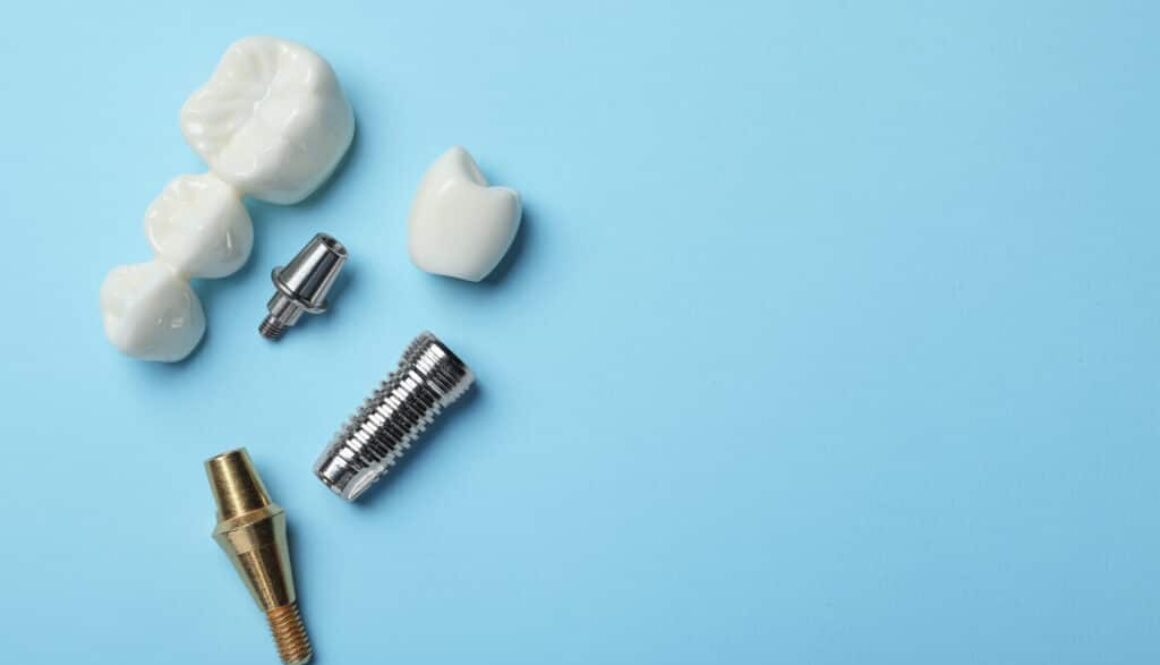
An implant is surgically placed into the jawbone. After appropriate healing, a dental restoration such as a crown can be attached to replace the visible portion of the tooth.
Dental implants may be used to replace a single tooth or help support restorations replacing multiple teeth.
Potential advantages include:
- A fixed tooth replacement
- No need to prepare neighboring teeth solely to support a single-tooth implant
- Support within the jawbone
- Natural-looking restoration
- Strong chewing function
Not everyone is immediately a candidate for implant treatment. Bone availability, gum health, medical history, smoking, oral hygiene, and other factors may affect treatment planning.
Dental Bridges
A dental bridge is another fixed option for replacing missing teeth.
A traditional bridge typically uses crowns on the natural teeth on either side of the empty space. An artificial tooth is connected between them to “bridge” the gap.
Dental bridges may be a good option for certain patients who want a fixed restoration but aren’t pursuing an implant.
They can help restore appearance and chewing function while filling the space left by a missing tooth.
Because traditional bridges rely on supporting teeth, the health and strength of those teeth are important considerations.
Removable Partial Dentures
A removable partial denture can replace several missing teeth while using the remaining natural teeth for support.
Unlike a fixed bridge, a partial denture is designed to be removed for cleaning.
Partial dentures can be especially useful when teeth are missing in multiple areas of the mouth.
Your dentist can explain different designs and help determine whether a partial denture fits your needs.
Full Dentures
When all or most teeth in an arch are missing, a full denture may be considered.
Traditional dentures rest on the gums and are removable.
For some patients, dental implants may also be incorporated into a treatment plan to provide additional support or retention for certain types of dentures.
Your treatment plan will depend on your oral anatomy, health, preferences, and goals.
Dental Implant or Bridge: Which Is Better?
Both dental implants and bridges can successfully replace missing teeth, but they work differently.
An implant replaces the missing tooth independently by using support from the jawbone.
A traditional bridge relies on neighboring teeth.
Factors to consider include:
- Health of neighboring teeth
- Bone availability
- Gum health
- Number of missing teeth
- Treatment timeline
- Surgical considerations
- Existing restorations
- Oral hygiene
- Personal preferences
Instead of looking for one universally “better” option, work with your dentist to determine which approach makes the most sense for your specific situation.
What If You’re Missing Several Teeth?
Losing multiple teeth doesn’t mean each tooth necessarily needs to be replaced with an individual implant.
Depending on the location and number of missing teeth, treatment options may include:
- Partial dentures
- Implant-supported bridges
- Traditional bridges
- Implant-supported dentures
- Conventional dentures
A comprehensive examination can help determine how to restore function without unnecessarily complicating treatment.
Should Every Missing Tooth Be Replaced?
Not every empty space automatically requires replacement.
For example, the treatment decision for a missing wisdom tooth is very different from the decision for a missing first molar or front tooth.
Your dentist will consider factors such as:
- Which tooth is missing
- Your bite
- Condition of surrounding teeth
- Bone and gum health
- Your age and overall health
- Your ability to maintain the restoration
- Your long-term dental goals
The important thing is to have the space evaluated rather than assuming replacement is or isn’t necessary.
How Soon Should You Replace a Missing Tooth?
The appropriate timeline varies.
Some patients begin planning for replacement before a damaged tooth is even extracted. Others may need time for an extraction site to heal before the next stage of treatment.
If you’re considering a dental implant, evaluating the area sooner can be useful because the amount and shape of the bone may influence treatment planning.
Even if you aren’t ready to proceed immediately, discussing your options early can help you make an informed decision.
What If You’ve Been Missing a Tooth for Years?
It’s still worth asking about your options.
Having a missing tooth for several years doesn’t necessarily mean it can’t be replaced.
However, neighboring teeth may have shifted, and changes in the bone or bite may affect which treatments are possible.
Your dentist may use X-rays or other imaging to evaluate the area and determine what options are currently available.
Caring for Your Tooth Replacement
Replacement teeth still require regular dental care.
Dental implants can’t develop cavities, but the gums and bone surrounding them must remain healthy. Bridges depend on healthy supporting teeth, which can still develop decay or gum disease. Dentures also require regular cleaning and professional monitoring.
Regardless of the restoration you choose:
- Brush your teeth twice daily.
- Clean between your teeth every day.
- Follow special cleaning instructions for bridges or implants.
- Clean removable dentures as directed.
- Attend regular dental exams.
- Schedule professional dental cleanings.
- Avoid using your teeth to open packages or bite extremely hard objects.
Protecting your remaining natural teeth is just as important as caring for your replacement.
Don’t Ignore a Missing Tooth
If a missing tooth isn’t visible when you smile and doesn’t currently hurt, it may be tempting to leave the space alone.
However, tooth loss can influence your bite, chewing ability, neighboring teeth, and surrounding bone over time.
Having the area evaluated allows you to understand those potential changes and decide whether replacement makes sense for you.
Explore Tooth Replacement at Young Family Dental Orem
Missing teeth don’t have to prevent you from eating, speaking, or smiling comfortably.
Today’s restorative dentistry offers several ways to replace lost teeth, from fixed dental bridges and implants to partial and full dentures.
At Young Family Dental Orem, we’ll evaluate your teeth, gums, bite, and overall oral health before discussing your options. Our goal is to help you choose a tooth replacement that fits your dental needs and supports a healthy, functional smile.
If you’re missing one tooth or several, contact Young Family Dental Orem to schedule an appointment and explore your options for restoring your smile.