



TMJ Awareness Month: What is TMJ Disorder and What Can I Do About It?
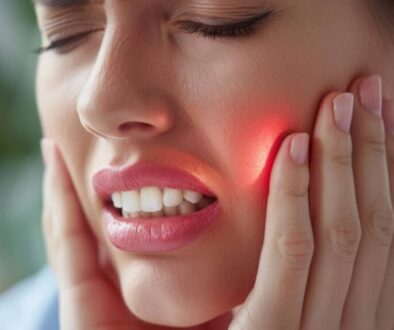
Did you know that November is TMJ Awareness Month? TMJ disorder is a condition that affects the jaw joint and can cause pain, clicking, or popping sounds, and difficulty opening and closing the mouth. If you are experiencing any of these symptoms, it’s important to see a dentist right away. In this blog post, we will discuss what TMJ disorder is, what causes it, and how you can treat it.
TMJ Awareness Month: What is TMJ Disorder?
The temporomandibular (tem-puh-roe-man-DIB-u-lur) joint (TMJ) acts like a sliding hinge, connecting your jawbone to your skull. You have one joint on each side of your jaw. TMJ disorders — a type of temporomandibular disorder or TMD — can cause pain in your jaw joint and in the muscles that control jaw movement.
TMJ disorder is a condition that affects the jaw joint and can cause pain, clicking, or popping sounds, and difficulty opening and closing the mouth. TMJ stands for temporomandibular joint (TMJ) which is the joint located in front of each ear at the base of your skull. It connects your lower jaw to your skull and helps you move your jaw to chew, speak, and make other facial expressions.
There are several possible causes of TMJ disorder including arthritis, injury to the joint, teeth grinding or clenching, stress, and misalignment of the bite.
TMJ Symptoms
Common symptoms of TMJ disorder include:
- Chronic jaw pain
- Pain while chewing or speaking
- Aching facial pain
- Headaches or migraines
- Ringing in your ears
- Sensitive or sore teeth
- Worn or cracked teeth
- Limited jaw movement (locked jaw)
- Sharp pain in your neck and shoulders
- Numbness and tingling in your fingers and arms
- Clicking, popping or grating sounds when you open and close your mouth
- Problems sleeping
- Trigeminal neuralgia
- Fibromyalgia
- Depression
Treatment for TMJ Disorder
Neuromuscular dentistry is dental treatment that focuses on correcting jaw misalignment. Inside your mouth are two joints — one on each side — that connect your jawbone to your skull. They are called temporomandibular joints, which is often abbreviated as TMJ. These joints are right in front of your ears and include a small cartilage disk that cushions the two bones so they can glide smoothly and allow you to chew and speak comfortably.
TMJ is a problem with the joint leading to pain in your jaw and in the muscles around it that control movement. It may be difficult to determine the exact cause of TMJ, because it can come from a variety of factors, including:
- Genetics that predispose you to TMJ disorders
- Arthritis that causes the cartilage to wear down
- Jaw injury that damages the cartilage or bones
TMJ Awareness Month: What to Expect at Your Appointment
At Young Family Dental, our dentist starts with an examination to diagnose your TMD. We listen to and feel your jaw opening, identify areas of discomfort or pain, and observe how well you can move your jaw. We may also recommend dental X-rays, a CT scan or an MRI to get a better look at your teeth, jawbone, muscles and other tissues in and around your joint.
Most TMJ disorders can be treated with over-the-counter pain medication (such as ibuprofen or acetaminophen), ice and heat to reduce swelling and relieve pain. Depending on your diagnosis, the dentist may also recommend other medications that have been shown to help relieve tooth grinding (bruxism), or prescribe muscle relaxants for short-term relief of muscle spasms leading to TMJ pain.
In addition to medication, the dentist may recommend an oral splint or mouthguard to help keep your jaw in place and avoid teeth grinding. Other nonsurgical treatments that can be effective for some people include physical therapy to stretch and strengthen your jaw muscles and even counseling or other therapy to try and better cope with stress or other factors contributing to teeth clenching or grinding.
Make an Appointment with Young Family Dental
At Young Family Dental, we provide comprehensive dental care for the whole family. Our experienced and friendly dentists are dedicated to helping you get your oral health back on track with a customized treatment plan that meets your specific needs and goals. If you think you may have TMJ or other jaw pain, contact us today to make an appointment. We look forward to helping you get back to life with a healthy and comfortable smile!